
CM Interview:Dr. Pavel Cejka(IBMBA)
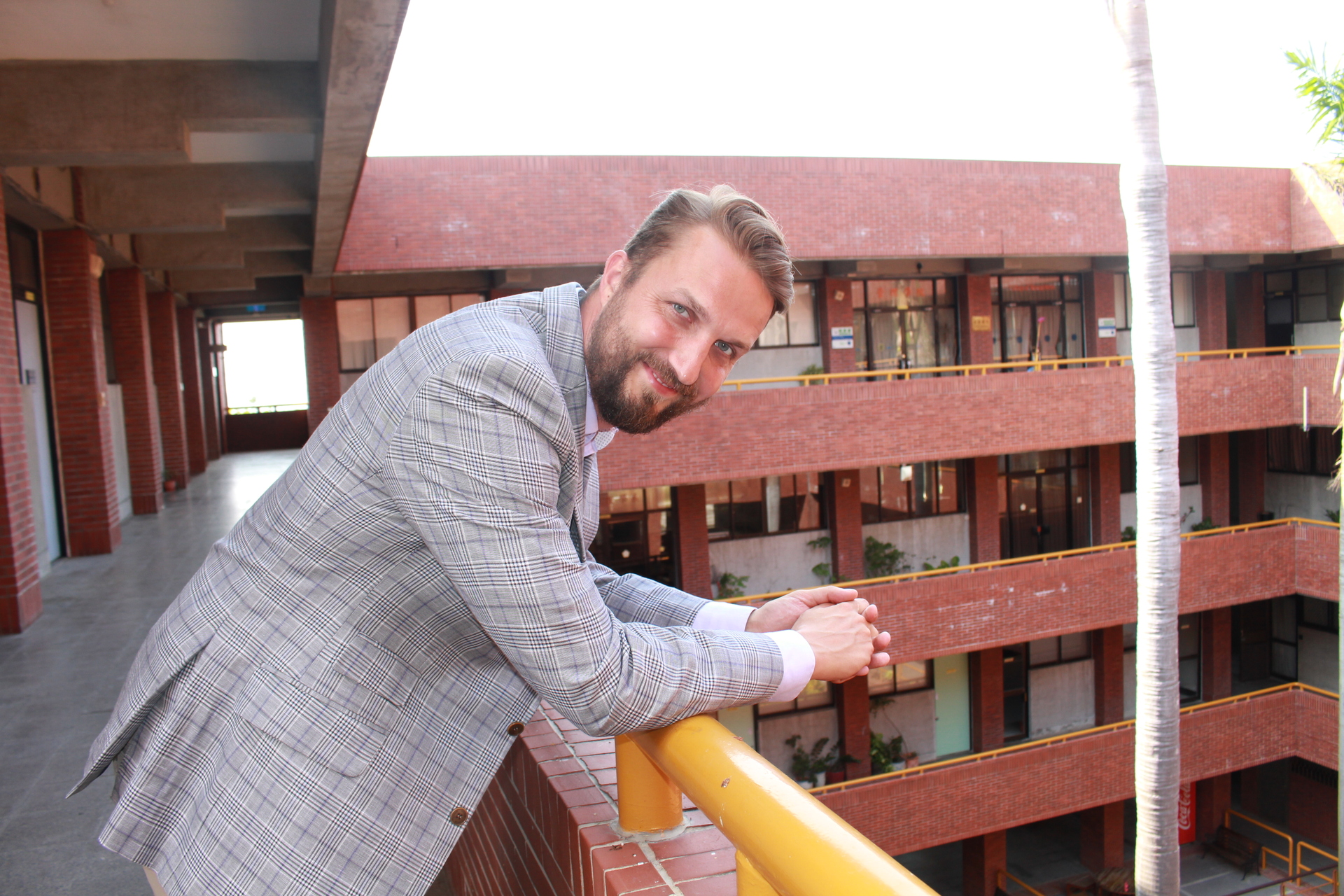
Pavel Cejka, a visiting lecturer to the IBMBA department, is not a stranger to the National Sun Yat-sen University campus. He is an alumnus who graduated from the university ten years ago and currently he is working in a Tableau company in London as a sales manager, responsible for the Central and Eastern Europe. Though he has started he own career path, he has never given up on the idea of returning to NSYSU campus to further educate underclassmen.
He first came to NSYSU as an undergraduate exchange student back in 2004. He mentioned his life at the international dorms left a lasting impression, and thus in 2006, he decided to return again as an MBA student. As a third-time returner, Pavel was nonetheless impressed by Kaohsiung’s continuous city developments and NSYSU’s campus expansions and renovations. Furthermore, he was happy to see how hospitable and amiable the staff and students still are compared to when he was a student here.
Q: How did you find the opportunity to come back to teach at NSYSU?
Ever since I graduated from NSYSU and returned back to Europe, I’ve always wanted to return to Taiwan again. This time around, I felt like I was more prepared to come back to give back to the campus because I’ve accumulated more work and personal experiences. After I received my PhD from University of Economics, Prague, I gained more work experiences in Europe and England. I believe these experiences will make my return to NSYSU more valuable, especially since this is my 10th year anniversary with the campus.
When I was studying in Taiwan, I’ve received the government’s sponsorship, learned immensely from the faculties in NSYSU, made many great friends. Even up till today, I still keep in contact with Professor Zhao Ping Yi. We have met up in Prague to share with each other our more recent experiences, and I was able to keep up with NSYSU news. Lastly, my sister also graduated from NSYSU in 2010 from the MBA department, so I guess this diploma runs in the family!
Q: As this is you third time returning to the campus, you’re returning with a new identity. How does being a teacher differ from when you were a student? What has changed?
First off, I really noticed the infrastructure development in Kaohsiung (such as the extinguished lights near Fishermen’s Wharf). Campus wise, NSYSU gained a new international research building. However, Taiwanese’s hospitality didn’t change. I received a lot of help from many faculties here on campus. I’m glad to see there is an increase in international students and I definitely noticed the internationalization of the entire College of Management. This time, I was able to meet with Department Director Jack Hsu and after conversing with him about his goals on the overall IB program, I realize there has been a greater emphasis placed on the quality of student learning. And I am beyond happy that I can partake in such a milestone.
Q: Please describe your class (Business Strategy)
In school, we learn about marketing, human resources management, and market survey as separate topics, but in actuality, they are all mixed together in a workplace. You are expected to know the technicalities as well as the integration of these areas. In this Business Strategy class, I incorporated many of these aspects to teach students how to utilize their own versions of business strategies.
Q: We’ve heard that you’ve always been interested in education, so please share with us your experience here as a visiting lecturer.
I think it’s very important to extract from the textbook to understand how real life cases and examples work. These cases build a foundation for in-class discussions. I also use roleplay to let students directly participate in these experiments. For example, I introduced the elevator pitch in one class session. In a workplace, you have limited time to present important points to your managers, so knowing how and when to condense information is important. Therefore, I had the students take the elevator in the school’s library, from the 3rd to the 9th floor, to practice speech brevity. I divided them into a manager group, a salesmen group, and an observer group and each student got a chance to rotate among the roles and practice their 10-second elevator pitches. This activity trains students’ reaction time.
I think NSYSU is a multi-cultural campus, with both domestic professors and international instructors here to further internationalize the MBA program. Students are also taking their learning experience to another level. Not only are they learning professional knowledge, they are also adapting to different teachers’ teaching styles. Though this may be stressful, I believe students can cope with these factors to further explore their capabilities.
Q: What improvements do you think IB and the class in particular can take into consideration?
I wish I had more time to think about this topic (class was still in session during the interview), but one thing for sure is the class has a lot of energy. Of course, facing a new teacher with a different teaching style can be scary and stressful, but I think the class was willing to accept the challenge. The first class was slightly quiet, but the students picked it in the second class. Everyone came to class well-prepared and was ready to dive into discussion. Overall, I think the students really put forth their best to adapt to a new learning environment.
Q: Lastly, as you prepare to leave Taiwan, do you have future plans to return again?
If NSYSU wishes me to come back to teach, of course I’d love to. I think this is a way to give back to the campus. However, in the short run, I want to focus on accumulating on my own work experiences. Perhaps, fifteen, twenty years down the line, when I face a turning point in my career path will I consider the education path. Also, by then I believe I’d have more work and personal experiences to share with future students.
As the interview came to an end, Pavel shared with us is personal motto: All could be achieved with the right people by your side and a bit of irony. This means that if one has positive attitude, he or she will receive mirroring energy. Life is full of discrepancies between expectations and reality. If you can use a lighter mood to face your challenges, reduce stress on yourself. And when you face a failure, you’ll most likely hold on to your beliefs and would like to get back on your feet. Furthermore, having a positive and flexible attitude will make you more people-oriented and will shape you to be a team player and perhaps a team leader!