

AI Craze- Department of Information Management follows up and offers robot courses
【Offered by Department of Information Management】
Entering the Industrial 4.0 era, along with the fast development of ITO, the cloud, smart mechanics, advanced European countries are developing more and more robots. The robotic high tech is gradually changing the world, and AI is apparently inevitable and essential for new tech business. Department of Information Management in National Sun-Yat-Sen University elevated the students’ integration and ability of making use of new technologies by combining information technology, AI, and management courses altogether, and cultivating transfields personnels which corporations need.
The director of Department of Information Management, Chiu Chao-Min, claims that the information management field includes information technology and general management. In regard of the information technology, AI, robots, data mining, big data analysis, blockchain and APP technology are the key segments of the current and future development and application. The department offers related courses such as “Electronic Commerce”, “Intelligent Robotic Systems: Design and Applications”, “Practical Big Data Analytics”, and “Blockchain”. In addition, to head up with the new future trend which is AI leading e-commerce and cooperational operating system, the department has the only “Smart Electronic Commerce Research Center” in Taiwan that has been proven by the Ministry of Education, and they will make good use of the advantage to process advanced research and developing creative new talents.
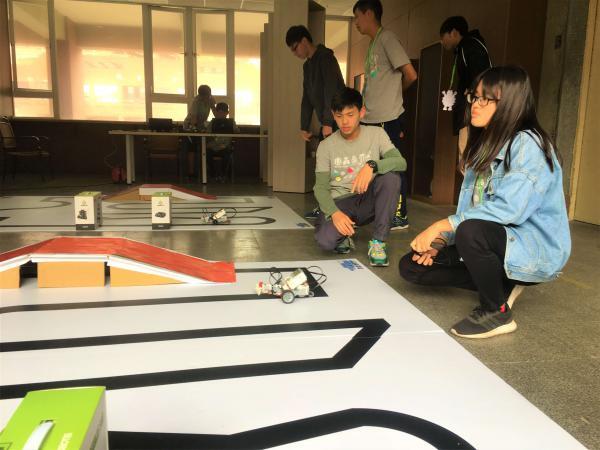
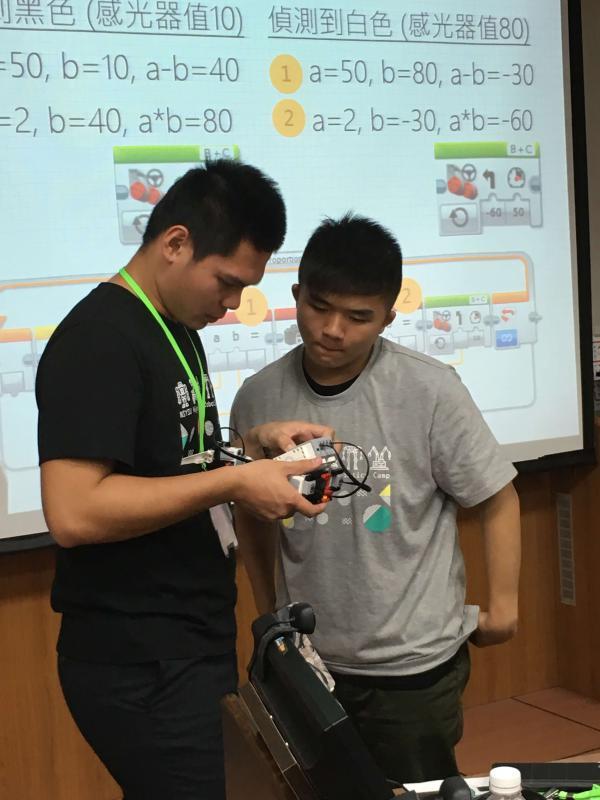
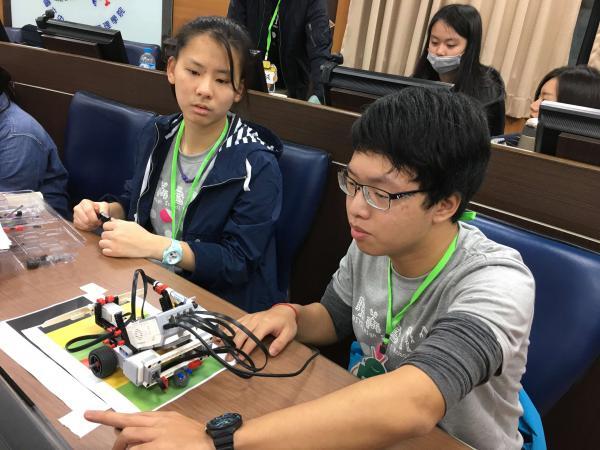
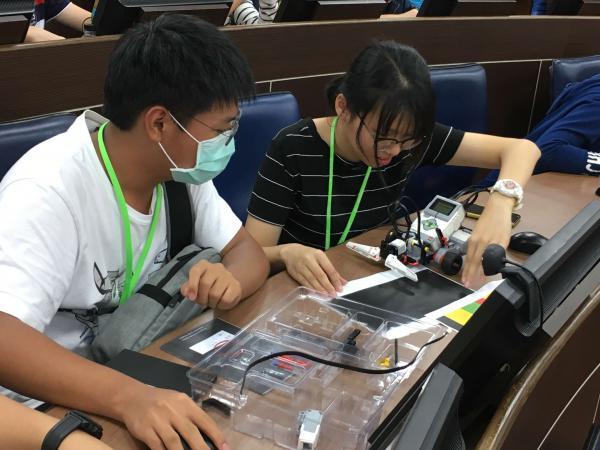
The professor of the course “Intelligent Robotic Systems: Design and Applications” , professor Shih-Yi James Chien from Department of Information Management claims that the robot system R&D process requires massive amount of theories and techniques. The trans-industrial applications and the smart robots need to be evaluated based users’ needs, then they can design the systems which match with users’ operating habits. The initial concept of the course is based on Human-Robot Interaction, and it focuses on the interacting process of the user and the robot (including touching, voice, gesture and so on). They also construct all sorts of different interating situation modes through case studies, for example, rescue mission on crime scenes, and other different types of Human-Robot Interaction comparisons. In order to provide students practical practice experiences, the course includes various applications of sensors (color, touch, super sonic distance sensors), and through creative exercises, they can develop more intelligent robot systems.
Chiu Chao-Min indicates that it is crucial to make good use and know how to manage information, and related talents are extremely popular in the field nowadays since all industries are highly informationalized. He suggests students to take not only information and management courses, but electronic commercial related courses to have the ability to integrate and utilize new technologies. As for the craze of AI, Shih-Yi James Chien says that having the ability to think logically and to have the information system developing techniques are the two key basics to designing AI. He suggests students also take psychology and cognitive science related courses, observe and think more, and try to understand users’ behaviours and motives will be helpful for designing robotic systems that are closer our daily life.
(Edited by Office of Public Affairs Division// Translated by IBMBA Vivien Hung)