

[English Corner] A Tasty Tour of Hong Kong Cafés: Exploring Dim Sum Culture in English
![[English Corner] A Tasty Tour of Hong Kong Cafés: Exploring Dim Sum Culture in EnglishImage](/static/file/24/1024/pictures/203/m/mcen1920x1920_large207580_528926518792.jpg)
![[English Corner] A Tasty Tour of Hong Kong Cafés: Exploring Dim Sum Culture in EnglishImage](/static/file/24/1024/pictures/203/m/mcen1920x1920_large207581_470188218792.jpg)
![[English Corner] A Tasty Tour of Hong Kong Cafés: Exploring Dim Sum Culture in EnglishImage](/static/file/24/1024/pictures/203/m/mcen1920x1920_large207582_636274418792.jpg)
![[English Corner] A Tasty Tour of Hong Kong Cafés: Exploring Dim Sum Culture in EnglishImage](/static/file/24/1024/pictures/203/m/mcen1920x1920_large207583_685685018792.jpg)
![[English Corner] A Tasty Tour of Hong Kong Cafés: Exploring Dim Sum Culture in EnglishImage](/static/file/24/1024/pictures/203/m/mcen1920x1920_large207584_118516618792.jpg)
![[English Corner] A Tasty Tour of Hong Kong Cafés: Exploring Dim Sum Culture in EnglishImage](/static/file/24/1024/pictures/203/m/mcen1920x1920_large207585_611566618792.jpg)
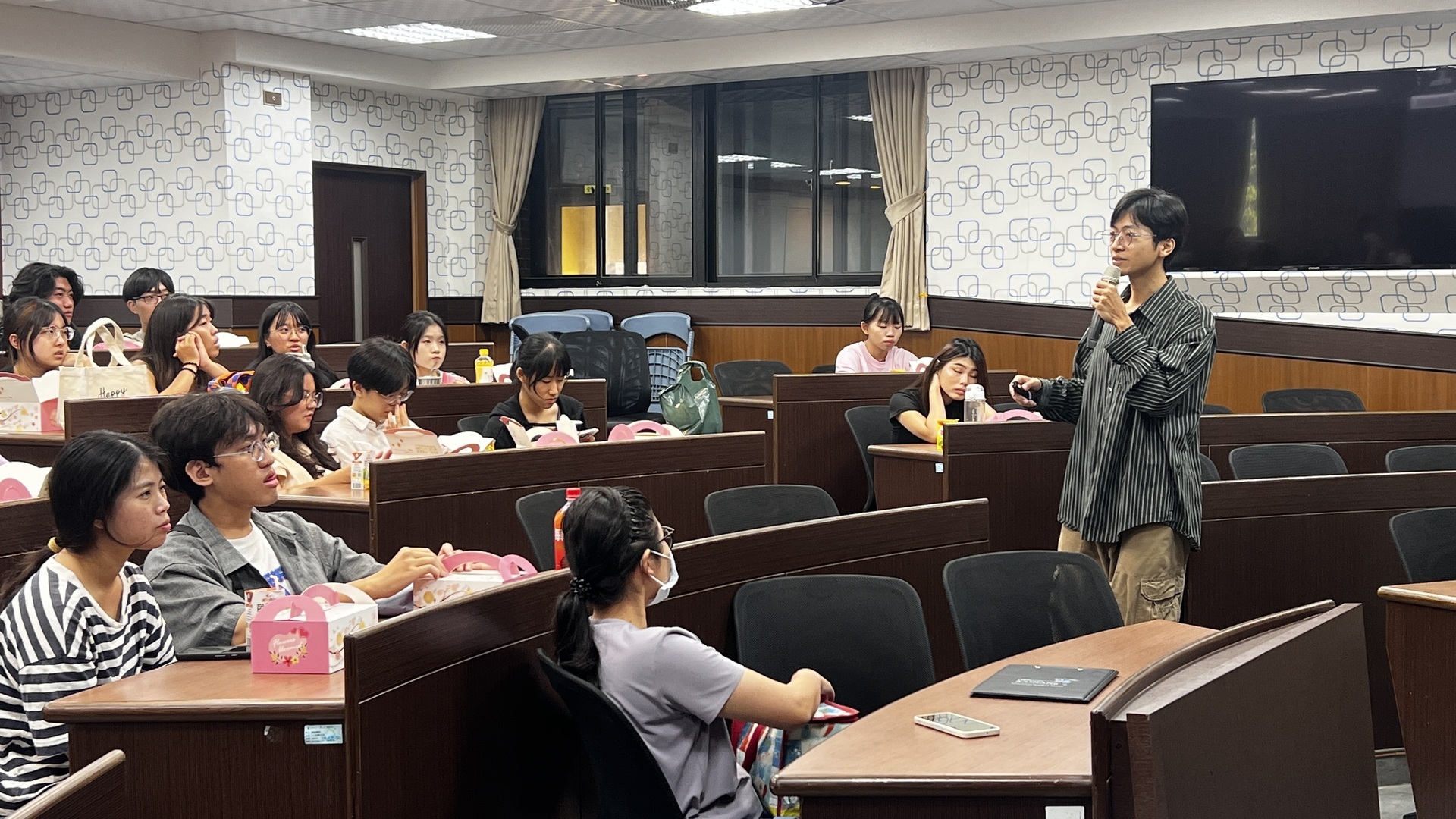
The College of Management English Learning Corner held its first English Corner of the semester on October 18th: " Exploring Hong Kong Culture Through Movies – Hong Kong Cha Chaan Teng." Sociology student Tsui from Hong Kong shared insights into Hong Kong's Cha Chaan Teng culture in English. In Taiwan, Hong Kong cuisine often brings to mind dim sum and Cha Chaan Teng. But how does Hong Kong-style dining look from a Hong Kong perspective compared to how Taiwanese people imagine it?
Tsui began by showing two clips from Hong Kong films, explaining the daily operations and unique dishes of Cha Chaan Teng. It turns out that these restaurants have an interesting historical origin. In the 1950s, Hong Kong was heavily influenced by colonial culture, and many food habits were inspired by British culture, such as the popularity of "3:15 PM tea time" in Hong Kong. For some construction workers, tea time was also a safety measure, ensuring no one fainted unnoticed in a hidden corner of a construction site. Many of the common dishes at Cha Chaan Teng, such as sizzling steak and "set meals," were adapted from Western menus. However, due to economic constraints, foods were substituted by cheaper ingredients, and Chinese seasonings like soy sauce were added, creating a distinct Hong Kong dining culture.
After the introduction, Tsui prepared some questions for students to discuss, such as whether there are restaurants in Taiwan similar to Hong Kong's Cha Chaan Teng. Some students felt that Taiwanese soy milk restaurants are quite similar, as they also serve food throughout the day. Another question was whether a representative Taiwanese restaurant would be more likely found in the south or the north, sparking a lively discussion with students sharing their preferences.
Through this activity, students gained an understanding of the food culture of Cha Chaan Teng. Since Hong Kong is a popular travel place for Taiwanese people, this sharing session likely helped students gain a deeper appreciation of how food in a place is closely tied to its historical development.
(Written by. Alex Tsui, The Department of Sociology / Proofread by the Media of the College of Management)