
[IBBA] Unlocking European Exchange Secrets: From Language Proficiency at 40% to Dual-Campus Experiences!
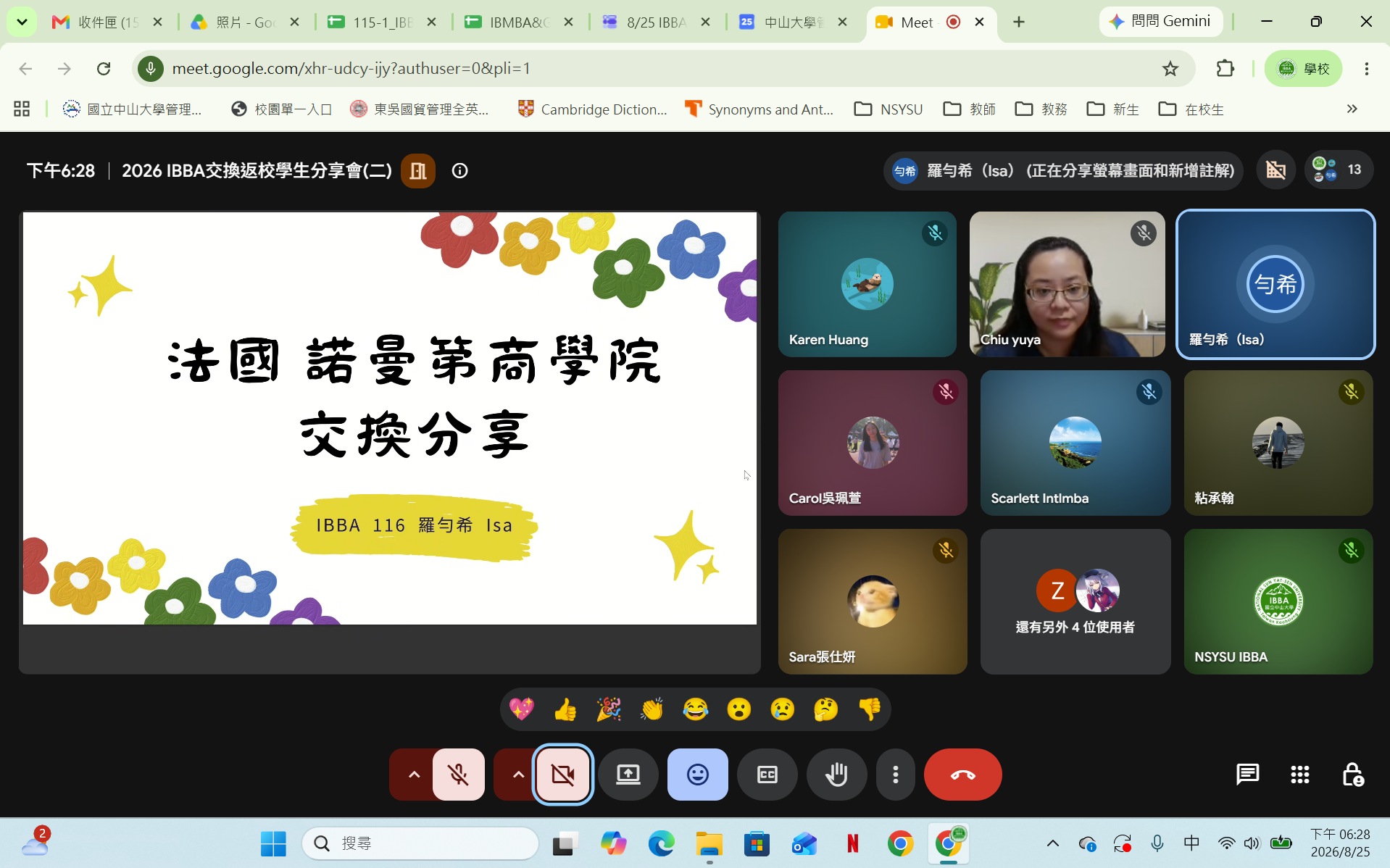
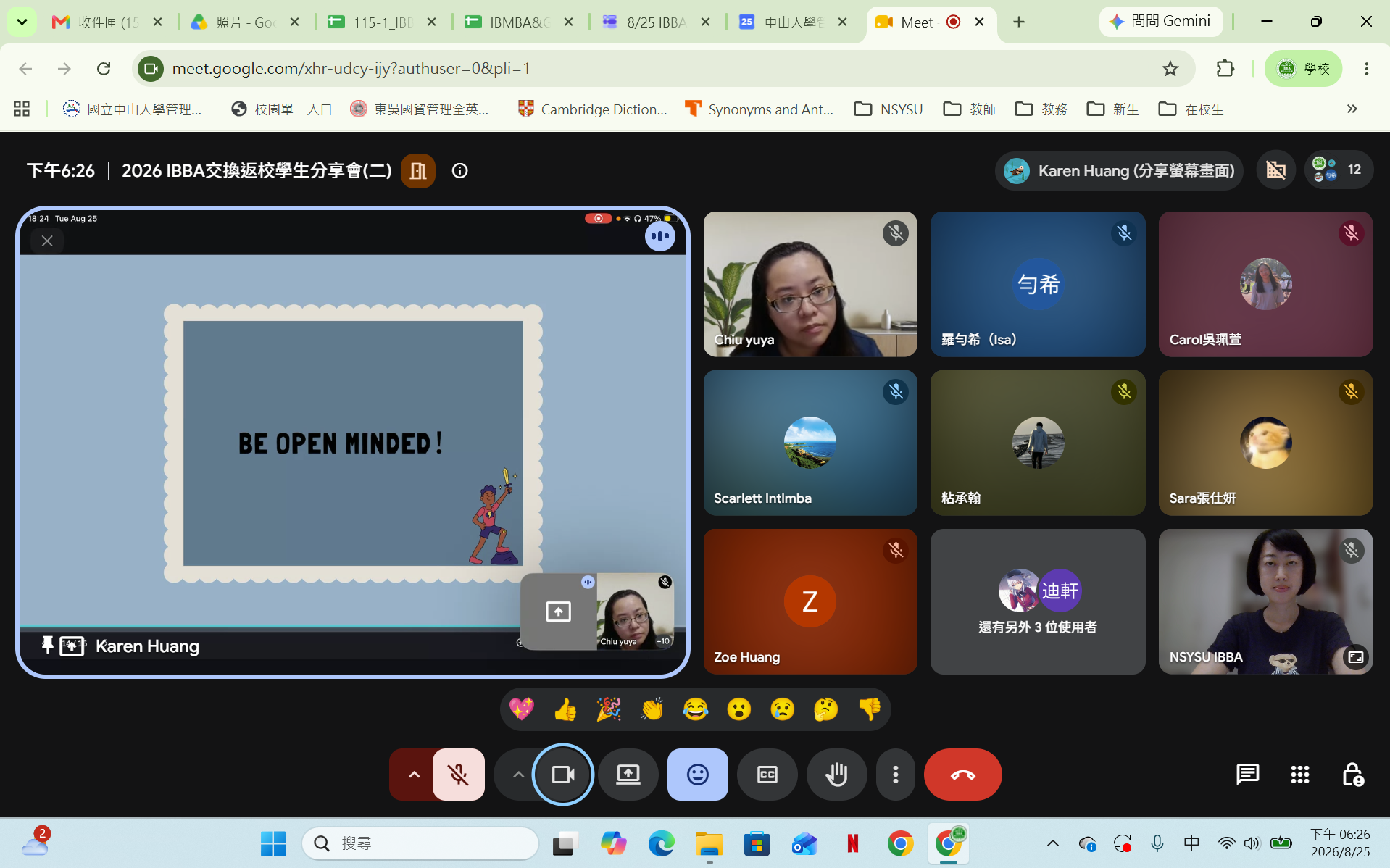
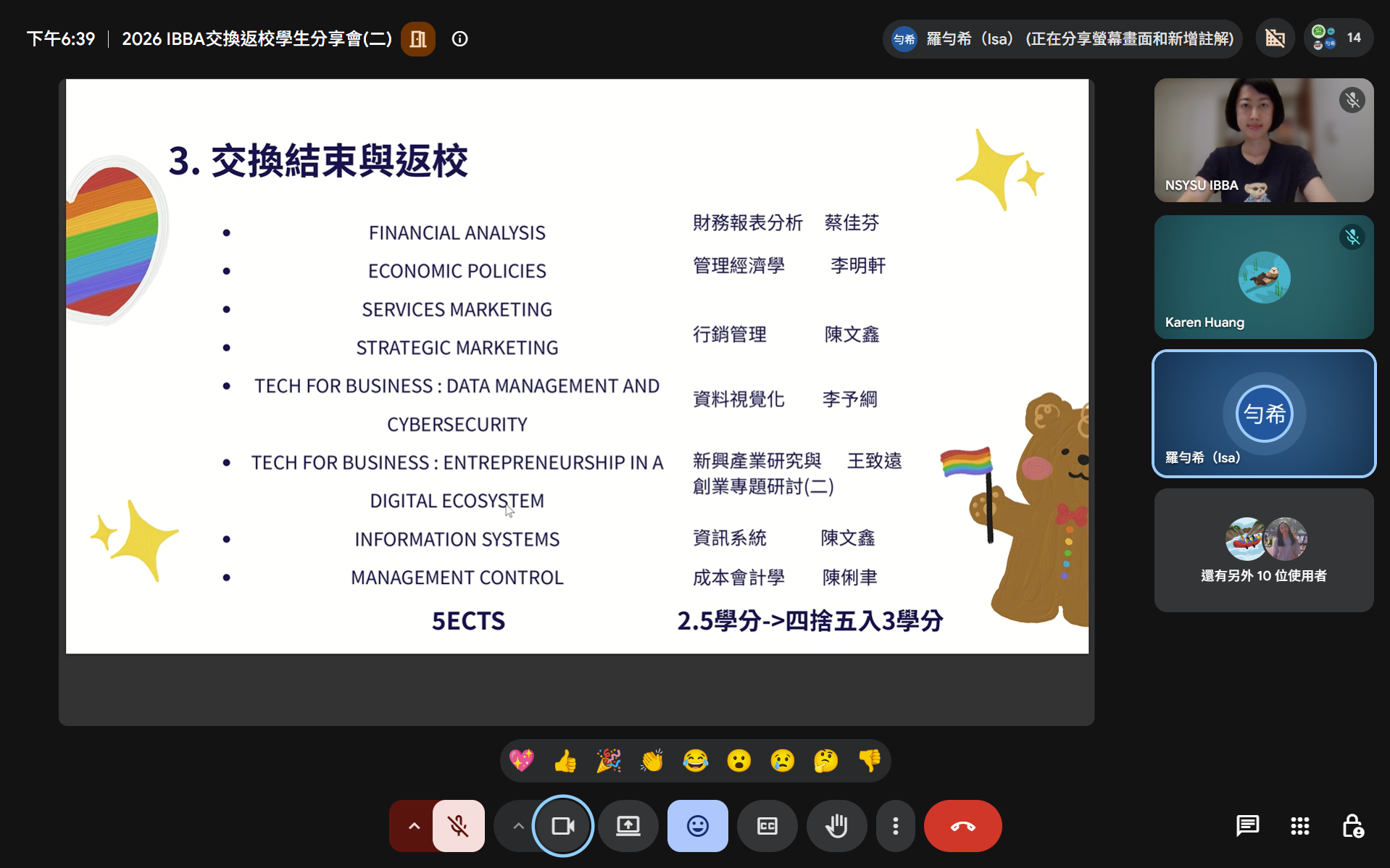
"Prepare for language proficiency tests early, beware of rental scams, and ensure your credit transfer pre-approval forms are signed before departure." These seemingly simple yet critical pieces of advice were generously shared by students from the International Business Administration (IBBA) Program at National Sun Yat-sen University (NSYSU). During the Study Abroad Exchange Sharing Session held on August 25, two students who previously studied in Europe summarized their firsthand experiences into practical insights, helping underclassmen master the core secrets of exchange applications and overseas living.
The event featured experience-sharing from Class of 2027 student Karen Huang (who studied at Universita degliStudi di Torino, Italy) and Isa Lo (who attends EM Normandie Business School, studying across the Oxford campus in the UK and the Le Harve campus in France). They provided a comprehensive overview of overseas exchange life, covering pre-application school selection strategies, academic learning styles, and adapting to life abroad.
[Key to Application: Language Proficiency Determines Opportunities]
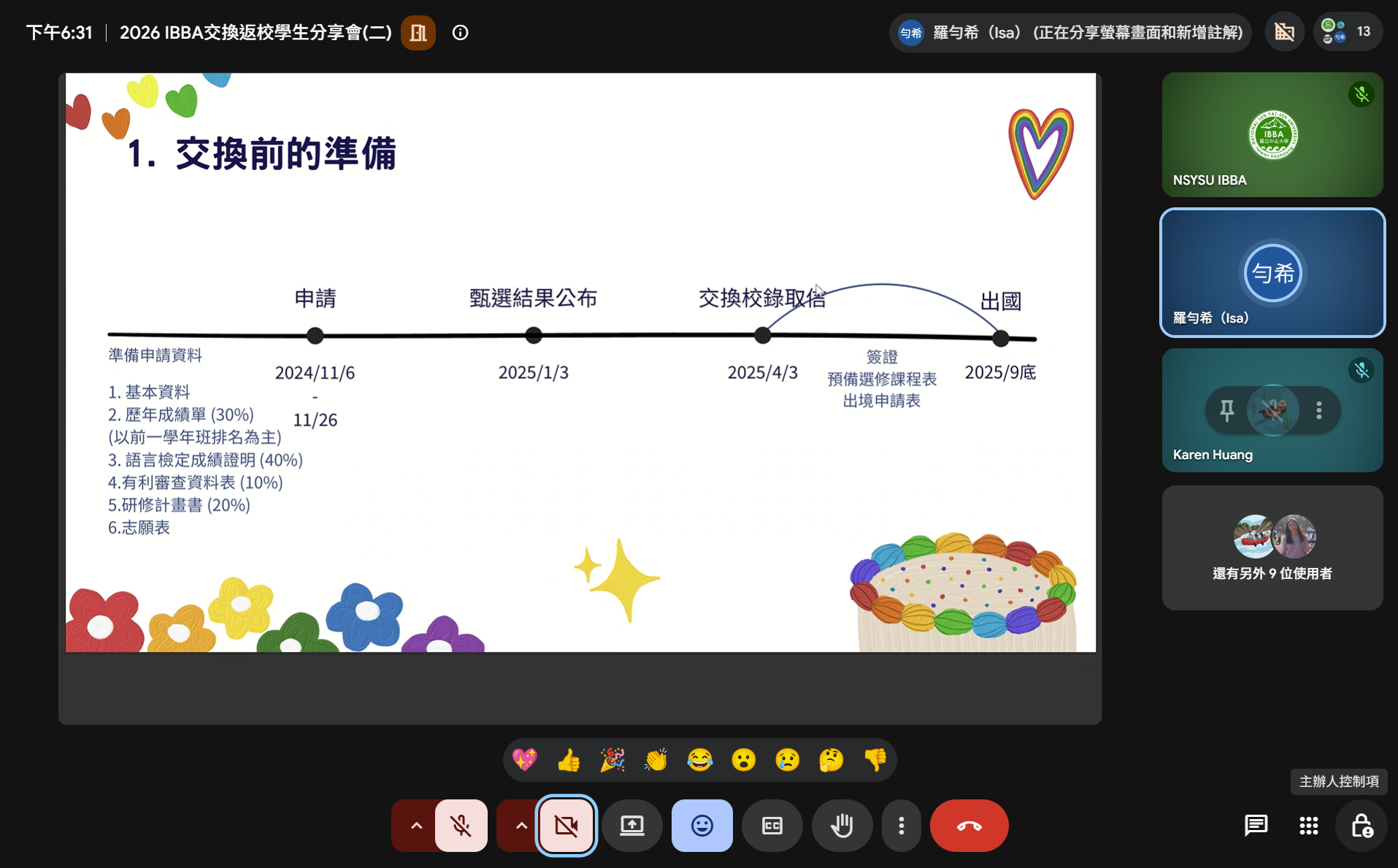
Isa Lo and Karen Huang highlighted that in the exchange selection evaluation, language proficiency scores account for a massive 40% (with academic GPA making up 30%, study plans 20%, and supporting application materials 10%), making it a key deciding factor. They strongly advised students to plan for English proficiency tests such as TOEIC, IELTS, or TOEFL to avoid last-minute testing that could compromise performance and limit choices of prospective universities.
For instance, the University of Turin requires a minimum TOEIC score of 650, while EM Normandie Business School requires 750 for undergraduate applicants (and 790 for graduate level). Higher language test scores unlock access to a broader selection of top-tier partner universities.
Important Note: Language test requirements are subject to change and often increase over time. Applicants should always refer to the official announcements released by each university and the College of Management for the application academic year, and are encouraged to refresh their scores early to secure a competitive edge.
[School Selection Strategy: Compatibility Over Ranking]
When considering school selection, both speakers emphasized that students should focus on personal alignment and compatibility, evaluating factors such as geographical location, budget, credit transferability, and the overall living environment.
Isa Lo shared that one of the greatest advantages of choosing EM Normandie Business School, a triple-crown accredited institution (EQUIS, AACSB, AMBA), is its multi-campus network across six locations. During her one-year exchange, she experienced two distinct cultural and academic environments by studying at both the Oxford campus in the UK and the Le Harve campus in France. Meanwhile, Karen Huang noted that selecting the University of Turin in Italy allowed her to immerse herself in South European culture and history while benefiting from rich business courses and a clear credit conversion mechanism (e.g., 6 ECTS credits convert to 3 NSYSU credits). Karen chose Universita degli Studi di Torino because she wanted to study in Milan, Italy for a master's degree. Therefore, she first learned about the Italian university environment through an exchange program during her university years.
[Overseas Growth: Cross-Cultural Communication & Independent Living]
Both students observed that European courses feature small class sizes, modular teaching, and a practical focus. Learning formats centered around individual presentations, real-world case studies, and group discussions, which helped them foster strong independent thinking and time management skills.
Beyond academia, living abroad proved to be a transformative growth journey. In addition to attending university orientation activities, participating in international food exchanges, and making global friends through the Erasmus Student Network (ESN), Isa shared her grand adventure of traveling across 23 countries during her 300 days abroad. They also offered practical living tips to their peers, such as "avoid renting on high floors without elevators," "stay vigilant against rental scams," and "balance leisure activities with academic responsibilities".
Quoting the famous saying, " Wherever you go becomes a part of you somehow," Isa encouraged underclassmen to clarify their motivations early and plan their budgets carefully, making exchange studies not just a journey of travel, but a meaningful journey of self-discovery.
[Five Key Takeaways for Overseas Exchange]
1. Language Proficiency is Your Ticket: Language scores constitute 40% of the selection evaluation. Higher scores expand your options, making early preparation essential to build competitiveness.
2. Calculate Your Selection Strategy Carefully: Beyond rankings and accreditations, evaluate geographic location, credit transfer rates, language thresholds, living cost budgets (housing and transportation), and unique campus features.
3. Verify Credit Transfer Procedures: Complete the credit transfer pre-approval form before departure, preserve all course syllabi and completion certificates while abroad, and submit them upon return to safeguard your graduation timeline.
4. Diverse Benefits Beyond Academics: In addition to domain knowledge, an exchange experience enhances language proficiency, cross-cultural communication, and personal independence while expanding international horizons and networks.
5. Plan Early and Dare to Try: Applying during sophomore or junior year is ideal for studying abroad during junior or senior year. Prepare visas, accommodation, and documentation well in advance.
[Educational Significance: The World is the Best Classroom]
The IBBA curriculum requires every student to complete a one-year study abroad exchange, aiming to cultivate global perspectives and leadership by encouraging students to step out into the world. This sharing session not only imparted actionable application insights but also demonstrated how IBBA students adapt and thrive in multicultural environments, stepping onto the global stage with courage and confidence.