
Culture Shock and Workplace Norms in Cross-Border Online Learning: Evidence from the NSYSU - Singapore Polytechnic Collaboration
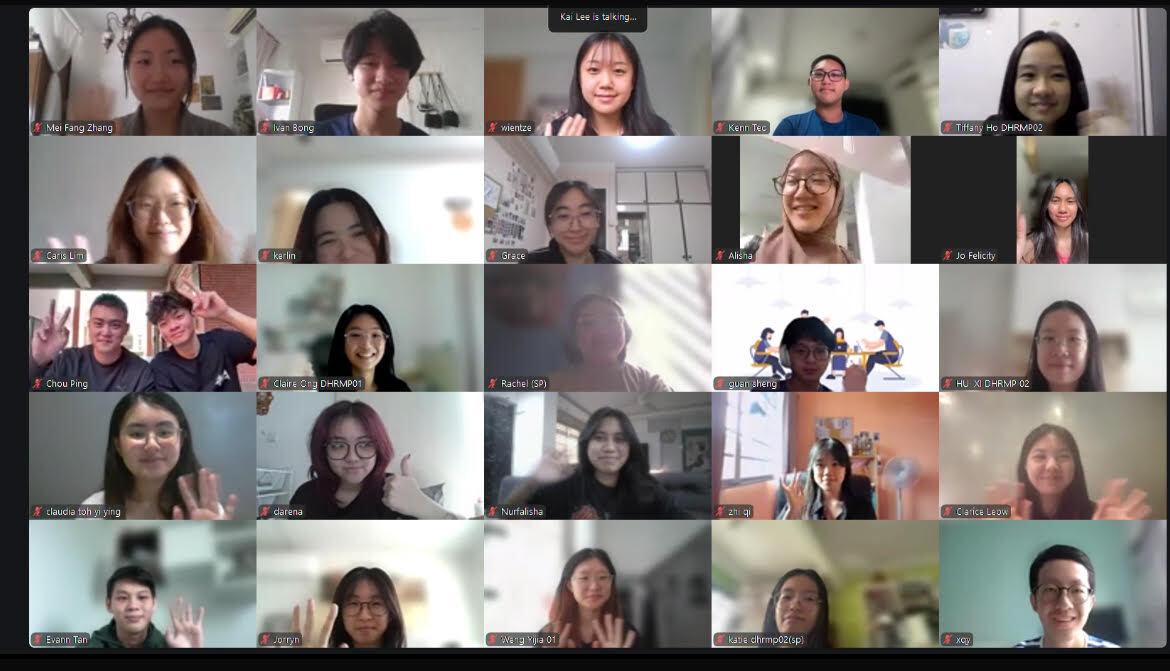
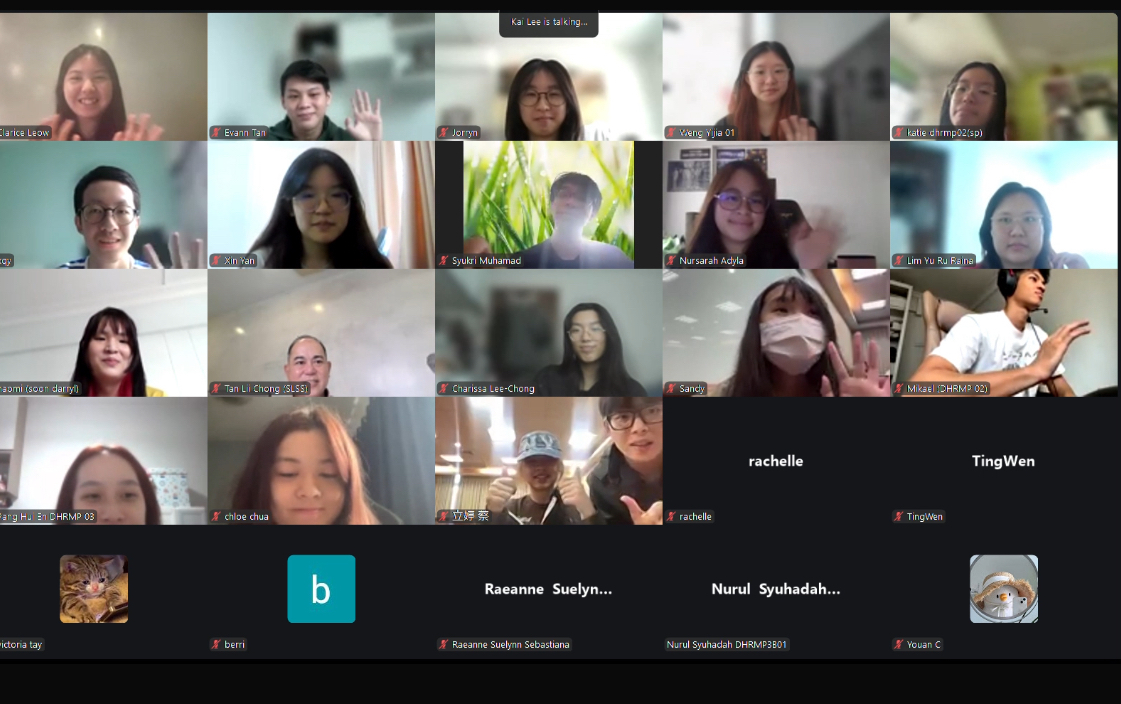
The online collaboration between National Sun Yat-sen University (NSYSU) and Singapore Polytechnic (SP) brought students from both sides together to talk about cultural differences, workplace expectations, and how people communicate across cultures. This activity was part of NSYSU’s Intercultural Communication class and SP’s Human Resource Management course, led by Instructor Kailynne Lee in Singapore and Dr. Ryan Brading in Taiwan, with support from Teaching Assistant Yanek Filipp. The goal was simple: help students make sense of cultural theories by using them in real conversations. Working in 12 groups in each institution, students from Singapore and Taiwan compared their experiences, shared viewpoints, and explored how cultural ideas play out when you meet and interact with people from another country. This initiative began through the interest of the International Relations and Accreditation Office (IRAO) of the College of Management at NSYSU and the connection established with Andy Teo, a former GHRM postgraduate student at NSYSU who is now the Deputy Course Chair at Singapore Polytechnic. This experience has set the stage for more conversations, more interaction, and more shared learning between NSYSU and SP.
The session began with Dr. Ryan Brading introducing homesickness, culture shock, and the U-Curve and W-Curve models to explain the emotional swings people go through when entering and later returning from a foreign culture. Students were shown how the journey typically moves from the initial honeymoon stage into frustration and crisis, before gradually stabilising into adjustment and acceptance, with a second dip often appearing when returning home and suddenly feeling out of place in familiar surroundings. George Orwell’s reflections on how being abroad sharpens one’s sense of “home” helped illustrate why ordinary details become so noticeable when returning. Real cases of Taiwanese and Chinese students in the UK were used to show how people often retreat into co-national networks during stress, relying on familiar routines and languages. The section ended with the reminder captured in the phrase “When in Rome, do as the Romans do,” highlighting the practical importance of adapting to local norms to navigate cultural environments more smoothly.
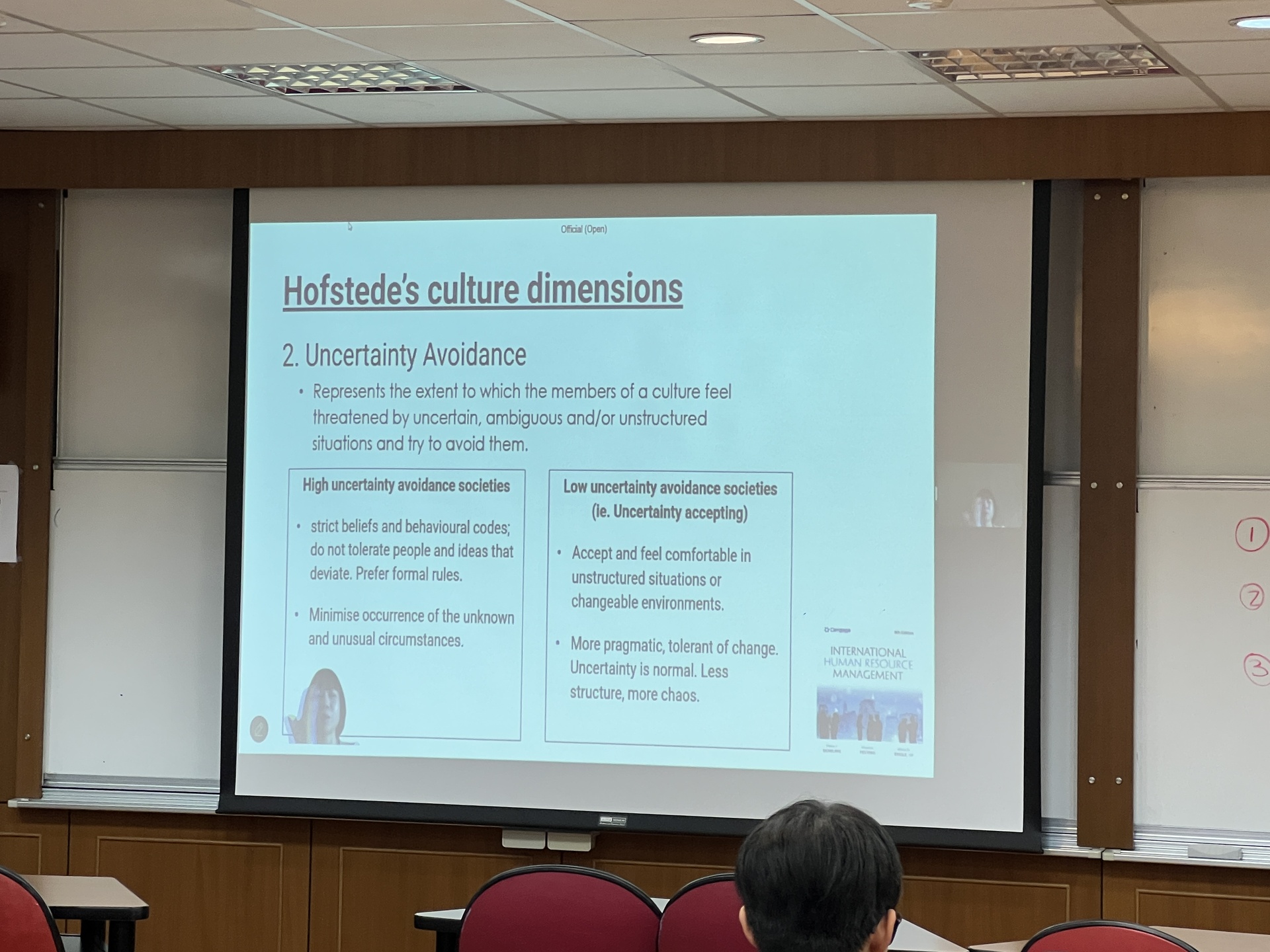
Following this, Instructor Kailynne Lee introduced key elements of Hofstede’s Six Cultural Dimensions, focusing on how Singapore and Taiwan differ in areas such as power distance, uncertainty avoidance, masculinity–femininity, long-term orientation, and indulgence–restraint. A photo from the session shows her slide on uncertainty avoidance projected in the NSYSU classroom, grounding the SP contribution within our shared learning environment. Kailynne explained how these cultural tendencies influence comfort with rules, ambiguity, hierarchy, and workplace expectations. Her section provided both groups with a clear conceptual starting point, ensuring that the later breakout-room discussions were based on a shared vocabulary and an informed understanding of how cultural values shape organisational behaviour.
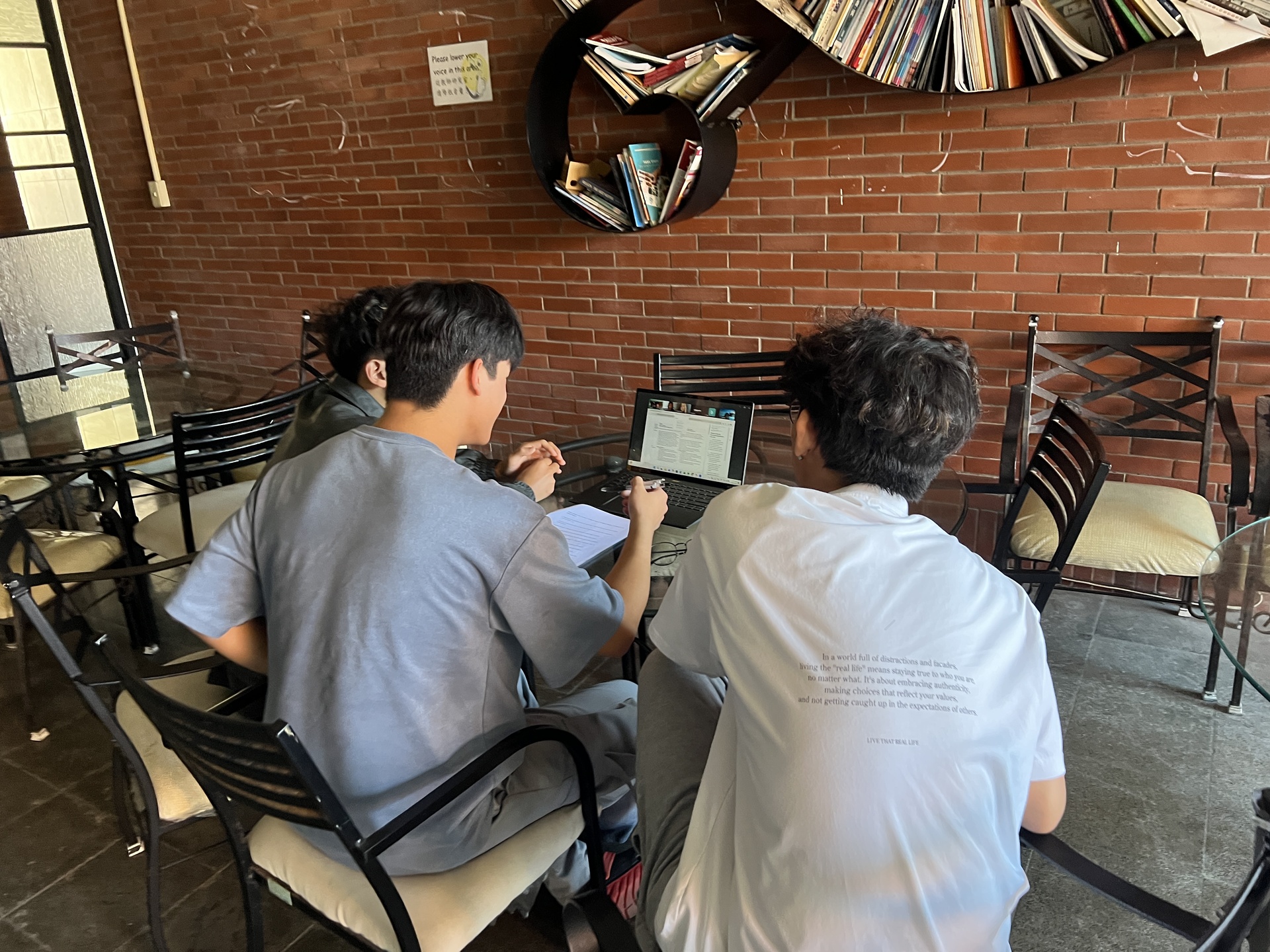
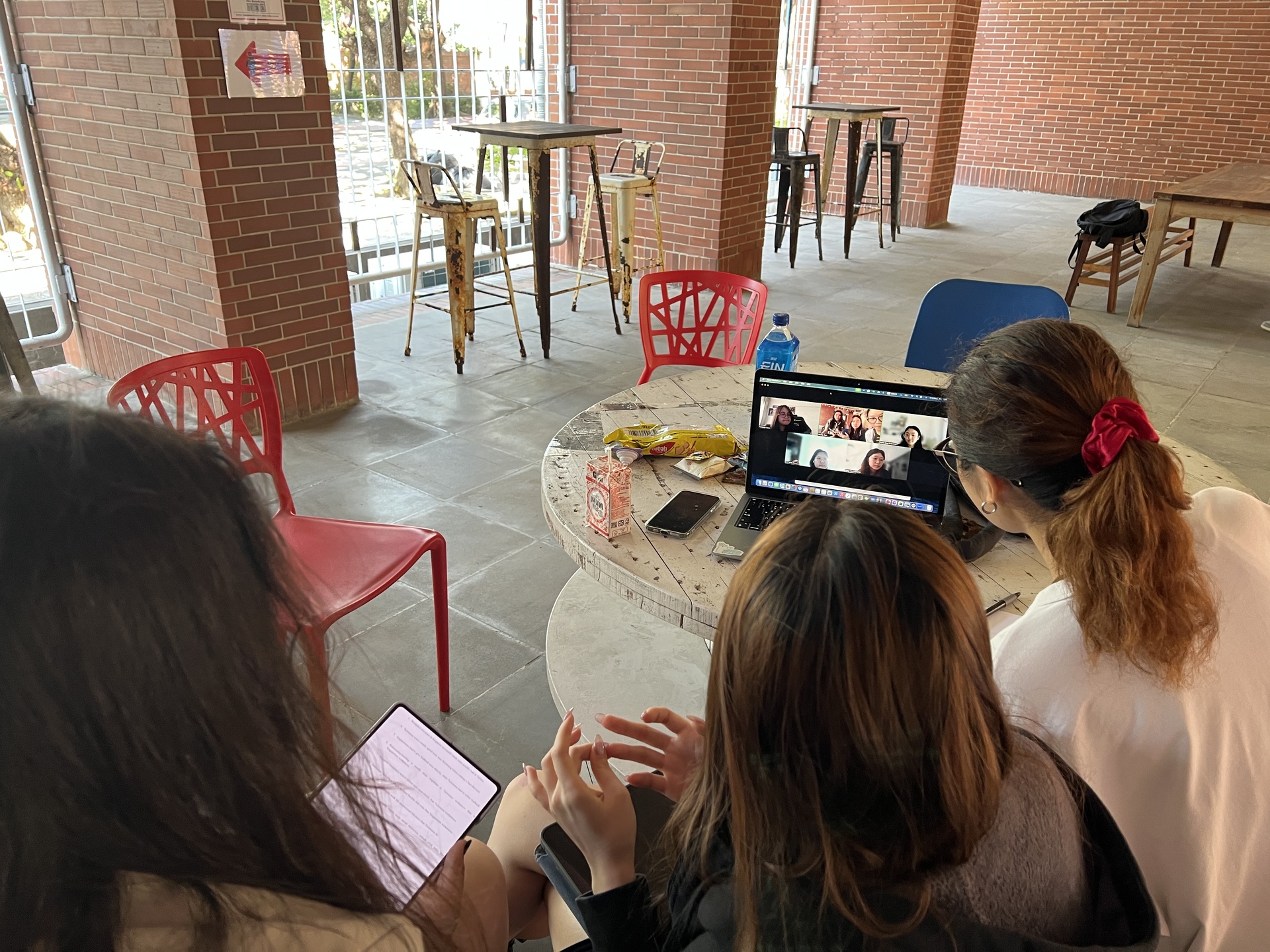
After both lectures, NSYSU students spread out across the College of Management and nearby study areas to join live Zoom discussions with their counterparts in Singapore. The photos show them sitting in small groups around laptops, using a mix of outdoor tables, hallway corners, and quieter indoor spaces. This variety of locations created a relaxed and flexible atmosphere, allowing the conversations to feel more natural and less formal. The images also document that the exchange took place synchronously, with students choosing spaces that suited their group dynamics and helped them focus during the cross-campus discussions.
Each mixed group completed two conversational tasks. The first focused on job-related themes such as workplace expectations, professional behaviour, and HR perspectives in Taiwan and Singapore. These discussions quickly brought out meaningful contrasts—Singapore’s tendency toward structure, efficiency, and clear procedures, compared with Taiwan’s more relationship-oriented, flexible, and context-sensitive approach. Students also considered how these differences affect communication styles, teamwork, and what employers in each country implicitly expect. The conversations helped them see how cultural logic shapes everyday workplace interactions and how easily misunderstandings can arise if these patterns are not recognised.
The second task asked students to respond to a set of statements about Taiwanese and Singaporean cultural behaviour, using a scale from strongly agree to strongly disagree. The photos show students holding and reviewing these worksheets as they compared their interpretations with the Singapore Polytechnic groups. This activity pushed them to question their assumptions, identify potential stereotypes, and explain the reasoning behind their choices. Through this exchange, they began developing a more grounded and evidence-based understanding of cultural differences instead of relying on simple generalisations.
The informal setting shown in the photos also added something to the experience. Students were chatting in open-air spots, courtyards, and relaxed corners around campus — very much in line with Taiwan’s easy-going, relationship-focused style. On the other hand, the more structured slide layout from Singapore Polytechnic reflected the tidier, more formal approach people often associate with Singapore. Just seeing these two styles side by side made Hofstede’s ideas feel real, not just theory.
Overall, the online collaboration really brought the theory to life. Instead of just hearing about cultural differences, students actually experienced them while talking to someone from another country. They got a feel for how communication styles shift, how people explain things differently, and how small misunderstandings can pop up — and get worked out. It gave them a boost of confidence and a clearer sense of what “intercultural communication” looks like in real situations. The photos show this perfectly: students genuinely engaged, chatting comfortably, and working together without the usual classroom stiffness.
This joint activity showed how valuable real-time intercultural exchanges can be for helping students understand culture in both academic and practical terms. The partnership between NSYSU and Singapore Polytechnic created a space where theory, personal experience, and cultural insight blended naturally, making the learning feel meaningful rather than abstract. It offered students an experience that was not only informative. It was also genuinely engaging from a social as well as a human level in various respects.