

[English Corner] International Alumni Ronnie Nunez Shares Entrepreneurial Journey: Flexibly Pivoting in a Crisis and Breaking Career Boundaries with Passion
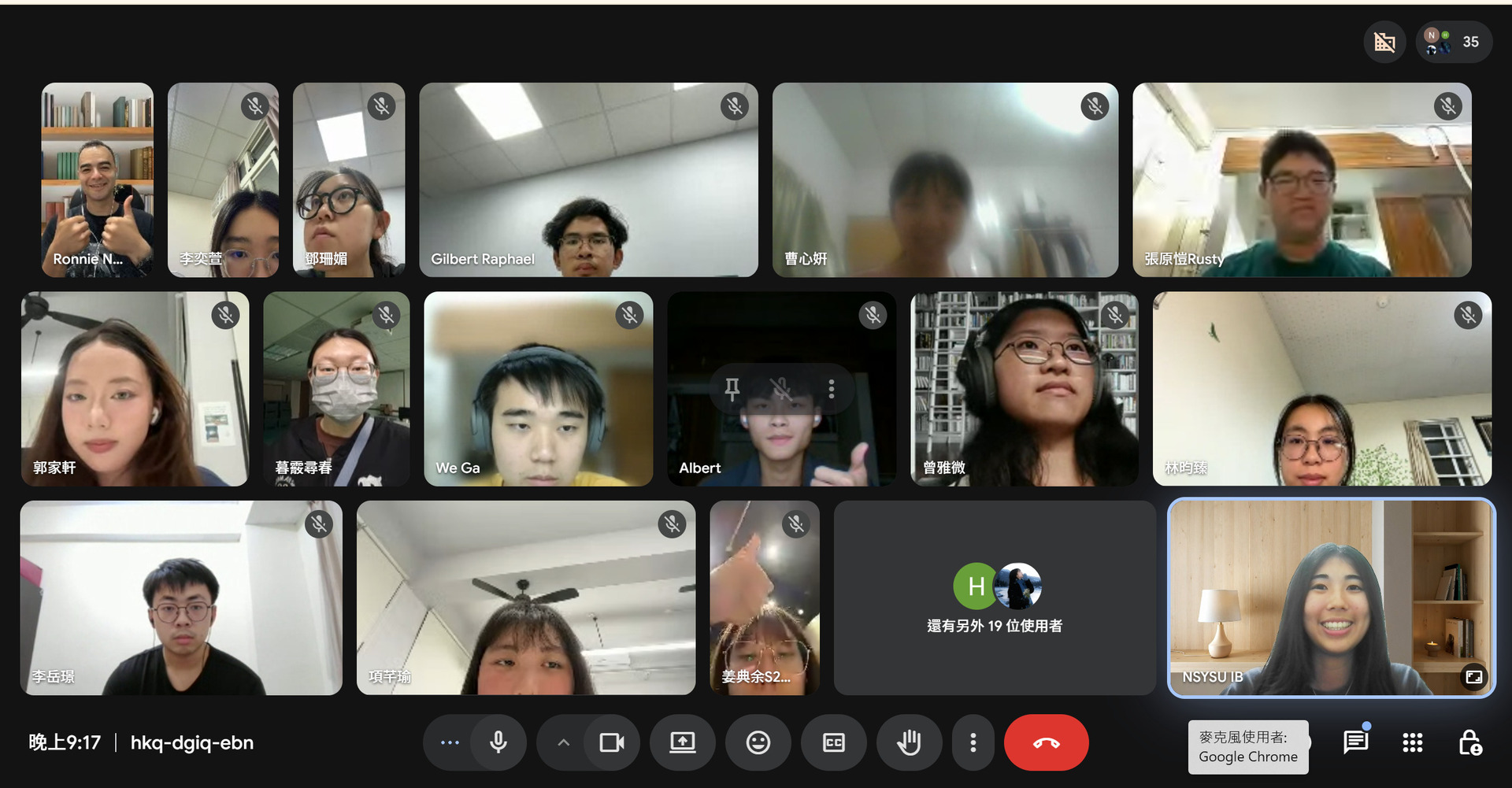
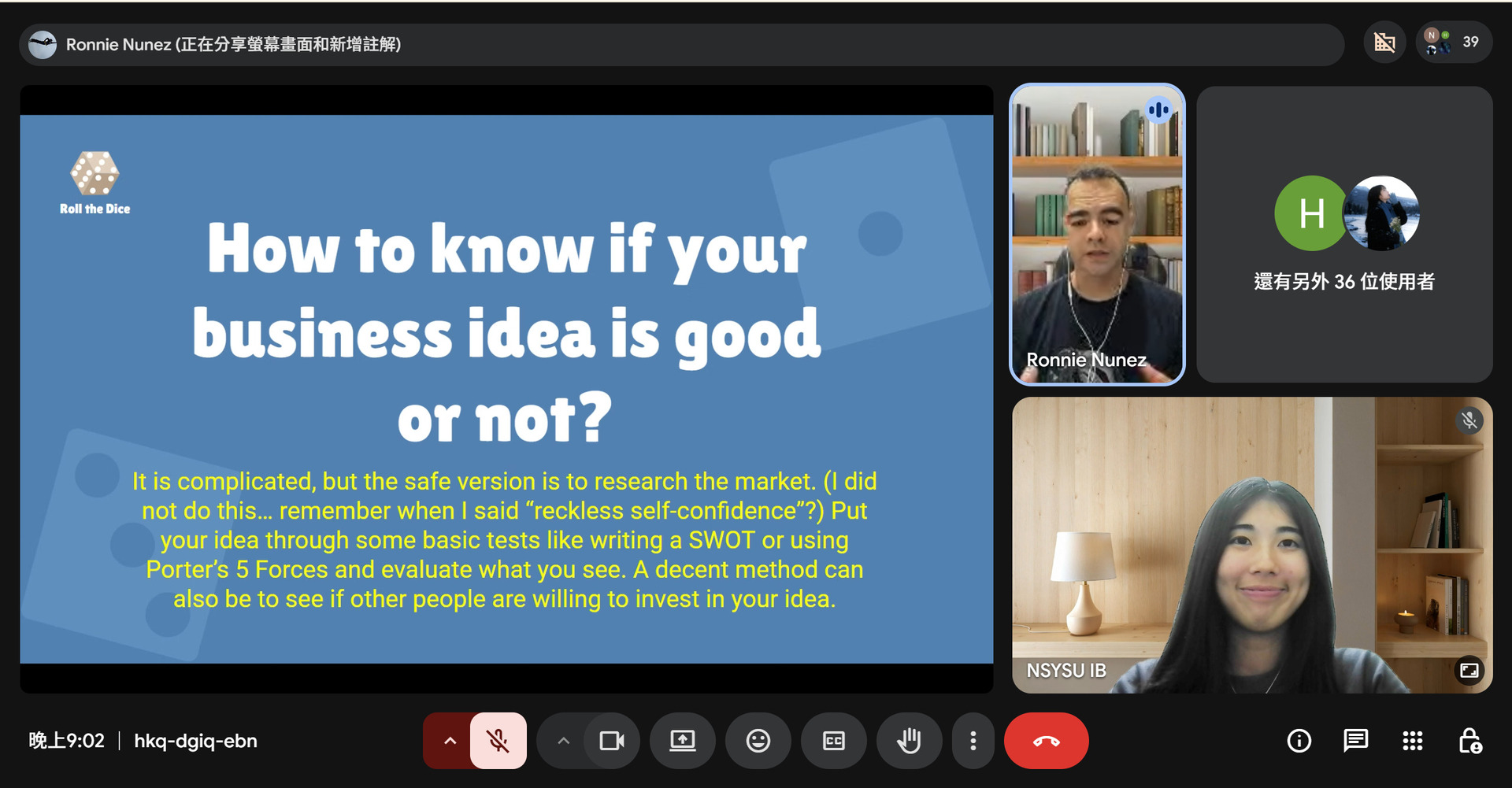
The International Relations and Accreditation Office of the College of Management held an English Corner session on May 20, 2026, inviting MBA alumni Ronnie Nunez as the guest speaker. With the theme "Entrepreneurial Survival and Crisis Management," Ronnie shared his practical experience of starting a business from scratch in Taiwan, surviving the heavy hit of the pandemic, and successfully leading his company through a flexible pivot. Through rich practical cases and interactive discussions, he guided students to understand the core fundamentals behind running a business, as well as the decisiveness needed when facing career crises.
【The Original Intention: Starting from Personal Passion】
Ronnie shared that his motivation for starting a business was not purely about chasing financial returns, but rather came from his deep love for the tabletop game Dungeons & Dragons (D&D). However, at that time, he could not find a suitable space in Kaohsiung to play and interact in person with fellow enthusiasts. Guided by the spirit of "necessity is the mother of invention," he boldly decided to build his own dream base. This fearless confidence gave birth to the "D20 Board Game Cafe" in Kaohsiung. He used this story to encourage students that, on their career or entrepreneurial paths, they should look beyond just fitting into the existing environment and instead use sharp insights to actively create value for themselves and others.
【When Ideals Meet Reality: The Unignorable Fundamentals of Business Operations】
"D20 was not built in a day." Ronnie frankly admitted that the successful operation of a storefront is filled with tedious administrative and legal challenges behind the scenes. During the lecture, he broke down the four survival pillars required for storefront management in detail:
✅ Compliant Licensing and Lease Agreements: This includes complicated business registration and signing storefront lease contracts.
✅ Business Transfer Details: Properly signing rights-transfer agreements with the previous shop owner.
✅ Food Hygiene and Ingredient Management: Maintaining precise daily inventory and quality control of kitchen ingredients (such as cheese, ham, toast, and various sauces).
✅ Core Industry Contract Negotiation: Negotiating long-term game licensing and supply chain contracts directly with major domestic and international board game publishers and distributors, which was also the hardest part of the early entrepreneurial stage.
Ronnie also emphasized that besides systems and hardware, "The People" are at the heart of a business's success or failure. Knowing how to recruit and build a team that shares the same vision is a leadership skill every entrepreneur must master.
【Breakthrough Thinking in a Crisis: From Pandemic Closures to B2B】
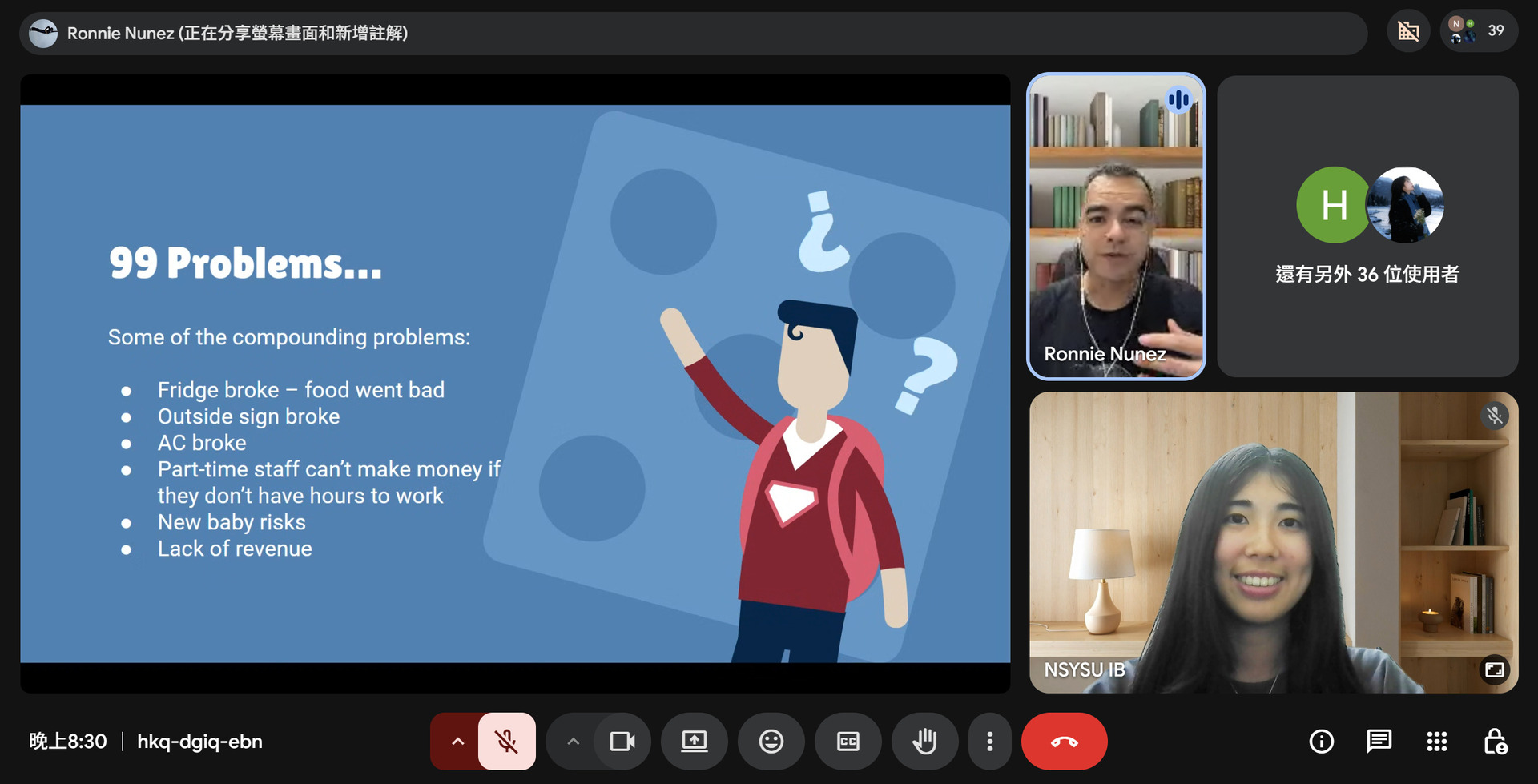
Just as Ronnie’s D20 Board Game Cafe was beginning to gain momentum, with a collection of more than 600 games, the COVID-19 pandemic hit unexpectedly. In-store revenue dropped sharply due to restrictions on physical gatherings. During this downturn, the shop's hardware equipment broke down one after another, causing costs to surge. On top of that, he had to balance the social responsibility of cutting back employee hours while protecting his family from infection risks. Under immense pressure, he showed crisis-driven decisiveness and officially closed the physical storefront in July 2021.
However, closing the shop was not the end. Ronnie changed his perspective: since he already had distributor contracts and channel experience built up from the past, why not pivot directly into B2B? He took on the large-scale contracts himself and then used cheaper, more flexible "micro-contracts" to sell board games to smaller shops that wanted to offer games but didn't want to pay huge contract fees. He successfully found a brand-new, profitable business opportunity in warehousing and logistics. He used this example to encourage students: when facing a bad environment you cannot change, instead of complaining, you should quickly adapt and reorganize the resources you have on hand!
【Interactive Q&A with students】
In response to a student's question about "how to face fear and anxiety in entrepreneurship and the workplace," Ronnie sincerely shared that he grew up in a poor environment, and he was able to overcome challenges through extra hard work, luck, and absolute determination. "When I feel afraid, I usually think: worst-case scenario, I just go back to the days I lived through before."
In addition, addressing the Work-Life Balance topic that students cared about, Ronnie provided clear, practical advice: entrepreneurs or fresh graduates must clearly list their personal "Priority List." For instance, in his case, family ranks higher than money. Once your core priorities are clear, you can quickly make rational judgments when facing critical choices and use flexible adjustments to handle changes in life.
【Conclusion: Developing Core Skills to Live with Resilience in a Changing World】
At the end of the event, Ronnie summarized that whether starting a micro-business or entering a multinational organization, the keys to success and survival lie in three core skills: Communication, Flexibility, and Problem Solving. Through Ronnie’s vivid real-world business scenarios and precise strategic analysis, students not only gained a better understanding of the realistic side of business operations, but also deeply learned how to build confidence, embrace change, and find their place and impact in an unpredictable and conflicting workplace environment.
(Written by Master of Business Administration Hsin-Ni Chang / Edited by College of Management Media Team)